
Speakers 2025
We are delighted to have two keynote speakers to open and close the 2025 Policy Hackathon. Start your hackathon journey with insight and inspiration from leading voices in policy, technology, innovation, and entrepreneurship. Our keynote speakers bring deep expertise and forward-thinking perspectives to help you approach challenges with clarity, creativity, and purpose. Whether you're building your first project or launching the next big idea, their experiences will set the stage for an impactful and engaging event.
Dr. Chinasa T. Okolo
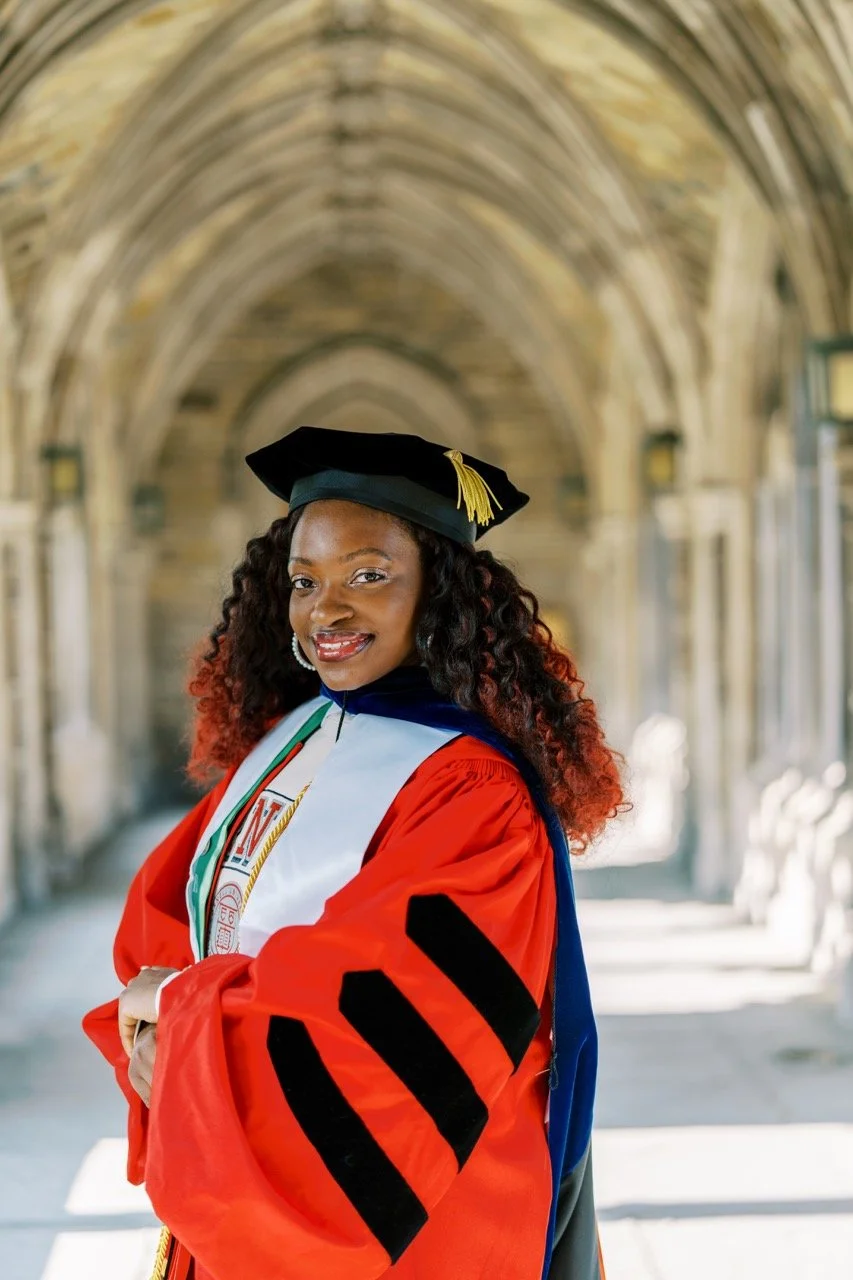
Chinasa T. Okolo, Ph.D., is an internationally recognized researcher, strategist, and policy advisor on AI governance and safety for the Global Majority. She holds a PhD and a master’s degree in computer science from Cornell University, and a bachelor’s degree in computer science from Pomona College. Dr. Okolo is the Founder of Technēcultură and a Policy Specialist at the United Nations Office for Digital and Emerging Technologies (ODET). Her research examines how African governments can effectuate robust AI and data governance, investigates the geopolitical impacts of AI, and analyzes datafication and algorithmic marginalization in Africa. She is a former Fellow at the Brookings Institution and has worked in research-based roles at Apple and Microsoft. Dr. Okolo advises numerous multilateral institutions, national governments, corporations, and nonprofits on issues related to AI, digital inclusion, and socioeconomic development.
Dr. Okolo has served as an expert contributing writer to the International AI Safety Report, a drafting member of the Nigerian National AI Strategy, a consulting expert to the African Union Continental AI Strategy, and the Editor-in-Chief of ACM SIGCAS Computers and Society. Dr. Okolo has been featured in TechCrunch and provided commentary to leading platforms such as NPR, MIT Technology Review, BBC, the New York Times, VICE, Scientific American, Fast Company, SEMAFOR, Rest of World, Voice of America, and Devex. Dr. Okolo has been recognized as one of the world’s most influential people in AI by TIME and honored in the inaugural Forbes 30 Under 30 AI list. Her research has also been covered widely in media outlets and published at top-tier venues in human-computer interaction and sociotechnical computing. Learn more about Dr. Chinasa T. Okolo at www.chinasatokolo.com.
David Sittenfeld, PhD, is the director at the Museum of Science in Boston. Prior to the directorship, he served as an educator at the Museum for more than 20 years, overseeing special projects and network-scale activities at the intersection of climate science and society.
Dr. Sittenfeld has led a diverse portfolio of large-scale Museum initiatives addressing a range of socio-scientific topics, including water and energy policy, nuclear waste siting, climate adaptation and mitigation, biodiversity, solar radiation management, synthetic biology, and planetary defense. He served as principal investigator for the NOAA-funded Citizen Science, Civics and Resilient Communities project and co-PI for the Science Center Public Forums project, which implemented community-based science-to-civics activities at 30 US science centers on extreme heat, drought, extreme precipitation, and sea level rise. He also led the Wicked Hot Boston and Wicked Hot Mystic projects, which identified heat- and air quality-related vulnerabilities in over 20 communities in and around Boston through community-engaged participatory science.
Dr. Sittenfeld holds a PhD in public policy with a concentration in sustainability and resilience from Northeastern University, where he researched and implemented participatory methods and geospatial modeling and visualization techniques for environmental health assessment and public engagement about climate-related hazards. He is cofounder of the Expert and Citizen Assessment of Science and Technology network, is a member of the extended leadership committee of the National Informal STEM Education Network, and is a member of the outreach planning committee for the Northeastern Section of the American Chemical Society, having received the ACS Salute to Excellence Awards in 2011 and 2019.